


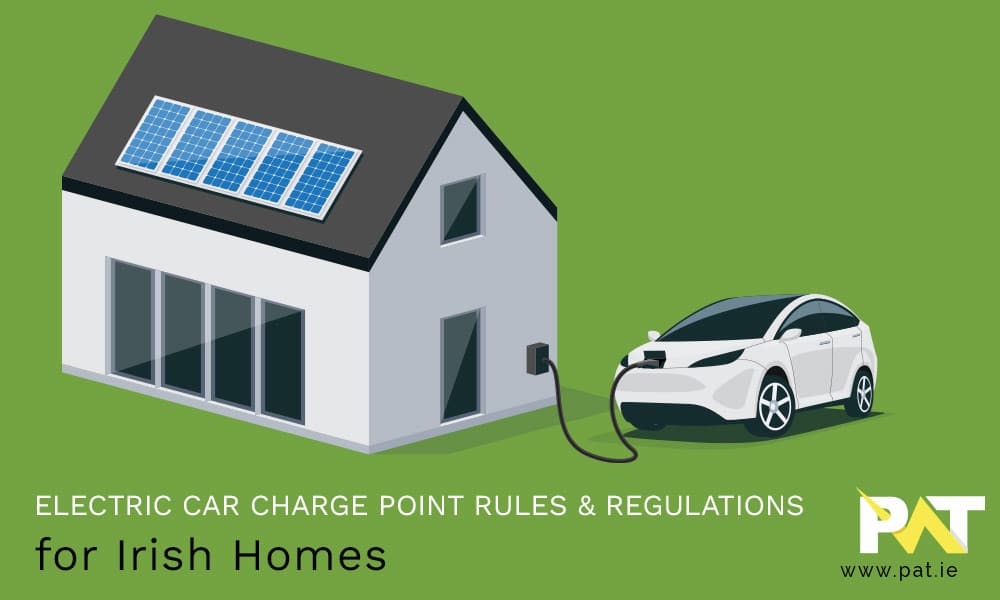
As electric vehicles (EV) are becoming increasingly popular and affordable, for many homeowners the most convenient way to charge their EV is at home. However, installing a home electric vehicle charge point in Ireland is not simply a matter of fitting new equipment, as there are specific rules and regulations enacted to ensure electrical safety and make sure that installations meet recognised standards. It is essential for homeowners planning to invest in EV charging infrastructure to understand these requirements before proceeding with installation.
EV Regulations for Homeowners
One of the most important regulations for homeowners to be aware of is that home EV charge points must comply with Ireland’s National Rules for Electrical Installations which measure and define how electrical systems are to be tested, designed and installed. Considering that EV chargers draw a significant and continuous electrical load, they must be installed on a dedicated circuit with appropriate protection devices, isolation switches, and earthing arrangements, all of which are required and designed to reduce the risk of electric shock, fire, and damage to household electrical systems.

Safe Electric Registered Electrical Contractor Required
Likewise, in Ireland, only a Safe Electric Registered Electrical Contractor or electrician is legally permitted to install and certify a domestic EV charge point. Once the installation is complete, the contractor or electrician must issue a completion certificate confirming that the work complies with national standards. Homeowners should retain this documentation, as it may be requested by insurers, grant providers such as SEAI, or during property sales. It is also important to state that installations carried out by unregistered individuals can lead to serious safety risks and may invalidate insurance cover.
Planning Permissions for EV Charge Points
Similarly, planning considerations are something homeowners should be aware of. In most instances, installing a charger on a private driveway or within the boundary of a home does not require planning permission. However, issues may arise if the charger or cable crosses a public footpath, is mounted on a boundary wall facing a public area, or installed on a shared or managed development. In apartments or housing estates with communal parking, written permission from the management company or property owner is typically required before installation.
SEAI Home Charger Grant
It is also important to note that many homeowners in Ireland take advantage of the SEAI Home Charger Grant, which assists with or completely covers the costs of installing a smart EV charger. To qualify, strict conditions apply, as the charger must be on the SEAI’s approved product list, installed by a Safe Electric electrician or electrical contractor, and the homeowner must apply for and receive grant approval before work begins. Failure to follow the correct process will result in the grant being ineligible, even if the installation itself is properly carried out to standards.
Similarly, another consideration for homeowners is the condition of the existing electrical installation, as older homes may not have sufficient capacity, modern consumer units, or compliant earthing systems to safely support an EV charger. In these instances, an electrician may recommend upgrades or a Periodic Inspection Report (PIR) before installation. While this can add to upfront costs, it ensures long-term safety and reliability and reduces the risk of faults or hazards once the charger is in use.
EV Charge Point Installation Specialists
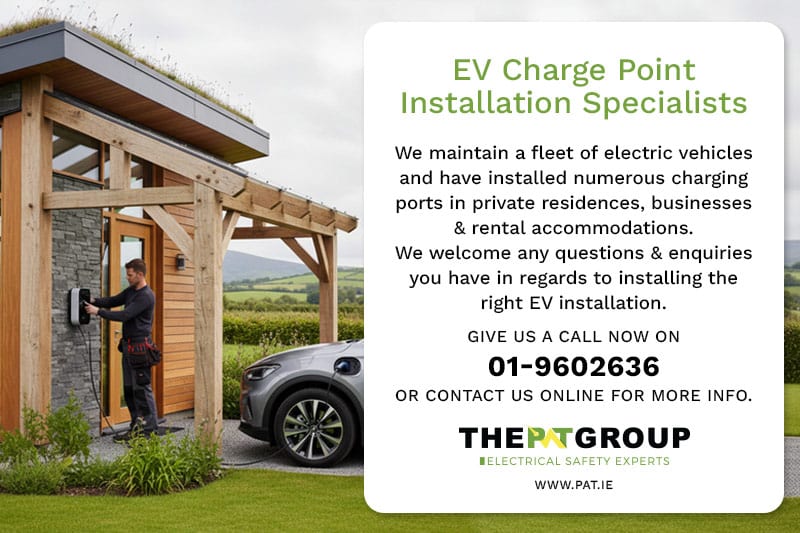
As the PAT Group maintains a fleet of electric vehicles and has installed numerous charging ports in private residences, businesses and rental accommodations all over Ireland, we welcome any questions and enquiries you may have in regards to installing the right EV installation to fit your needs. Give us a call now on 01-9602636 or contact us online to find out more.
If you found this post helpful make sure you check out our post about PAT Testing FAQ for Irish Businesses.