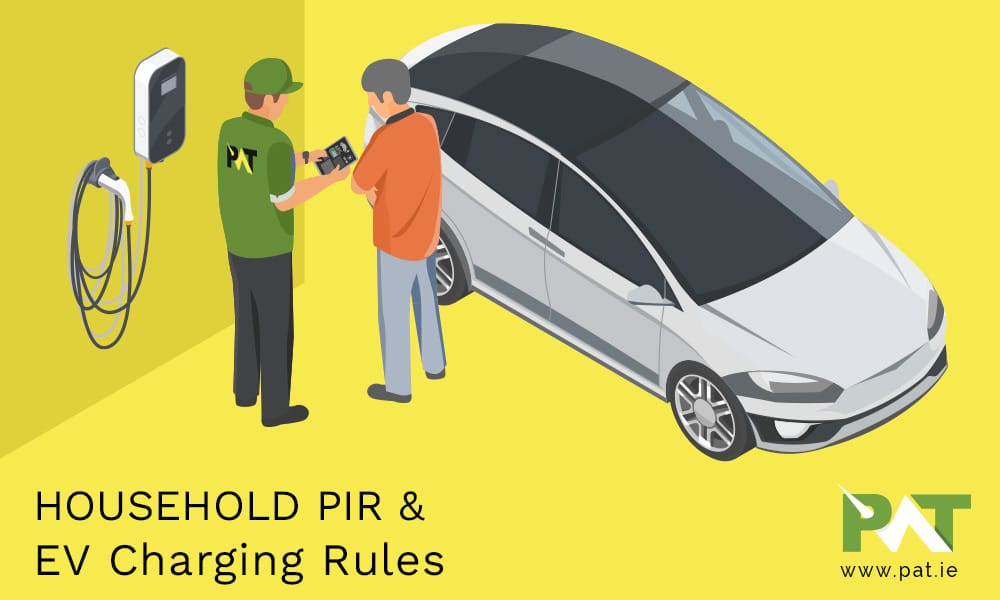
Ireland’s electrical regulations are evolving to reflect changes in how homes use and generate electricity, particularly with the increasing popularity and affordability of electric vehicles (EVs) and increased attention on personal electrical safety. We recently discussed electric car charge point regulations and in this post we’ll discuss what landlords and property stakeholders need to be aware of regarding Periodic Inspection Reports (PIRs) and newly updated rules and guidelines concerning household EV charging installations. These changes are not just technical updates as they have practical implications for consumer safety, compliance, property value, and insurance.
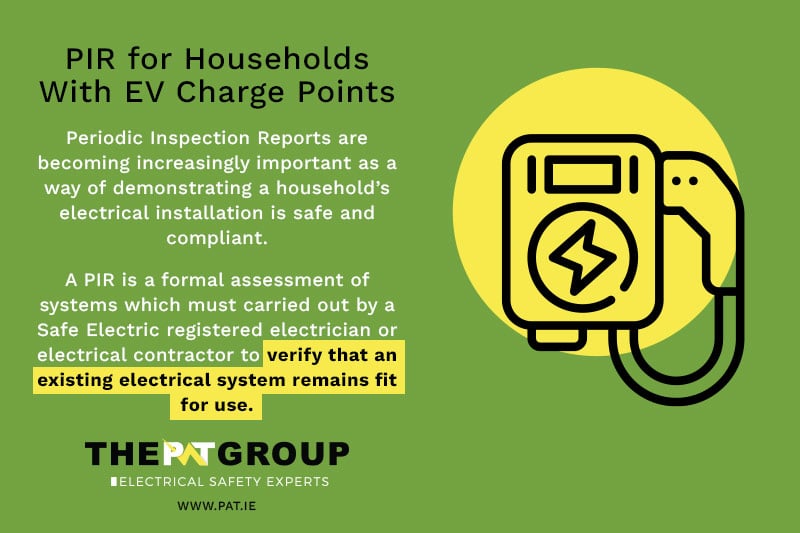
PIR for Households With EV Charge Points
Periodic Inspection Reports are becoming increasingly important in Ireland as a way of demonstrating a household’s electrical installation is safe and fully compliant with current electrical standards. A PIR is a formal assessment of systems which must carried out by a Safe Electric registered electrician or electrical contractor to verify that an existing electrical system remains fit for use. While PIRs are not mandatory for every private homeowner, they are becoming increasingly expected or required for rental properties, property sales, insurance assessments and before significant electrical upgrades such as EV charger installation.
Old Meets New
One notable change homeowners should be aware of is how PIRs interact with modern electrical loads, considering that many Irish homes were wired decades ago, before EV chargers, heat pumps, or solar charging systems were commonly used. A PIR can identify any older consumer units, earthing arrangements, or cabling which are no longer suitable to fit to purpose for current energy demands.
PIRS – The First Step Before EV Chargers
While this doesn’t always mean that an installation will be immediately dangerous, it can prompt the need for upgrades before new equipment can safely be connected. Due to this, PIRs are increasingly seen as the first step before approving EV chargers or other high-load technologies for installation. Likewise, another important change is ensuring that the existing electrical installation is suitable before an EV charger is fitted, with homeowners advised or required to have a PIR completed in advance. The report helps confirm that the home can safely handle the additional electrical load and that protective measures such as earthing and fault protection are adequate. For older homes, this step can prevent serious safety issues and costly failures later.
EV Charger Installation Requirements and Insurance
Alongside PIR developments, EV charging rules for households have become more clearly defined under Ireland’s National Rules for Electrical Installations, as home EV chargers must be installed on dedicated circuits, with appropriate protection devices and isolation. Similar to PIRs, EV charger installations must be completed and certified by a Safe Electric registered electrical contractor or electrician, and any self-installations or work carried out by unregistered individuals who are not compliant, may invalidate warranties, governmental grant funding or insurance coverage. For businesses or landlords and their insurance, these changes matter significantly. Insurers increasingly expect documented evidence that electrical systems, including EV chargers, are compliant with current standards. In the event of an electrical fire or fault, the presence of a recent PIR and proper certification can make the difference in a successful insurance claim.
Household PIR and EV Charging Specialists
If you have any questions or concerns about the safety or legality of your EV charger, or if you need help in getting on installed or certified, then give us a call now on 01-9602636 or contact us online for more info.
If you found this post helpful make sure you check out our post about Data Centre Electrical Maintenance.